
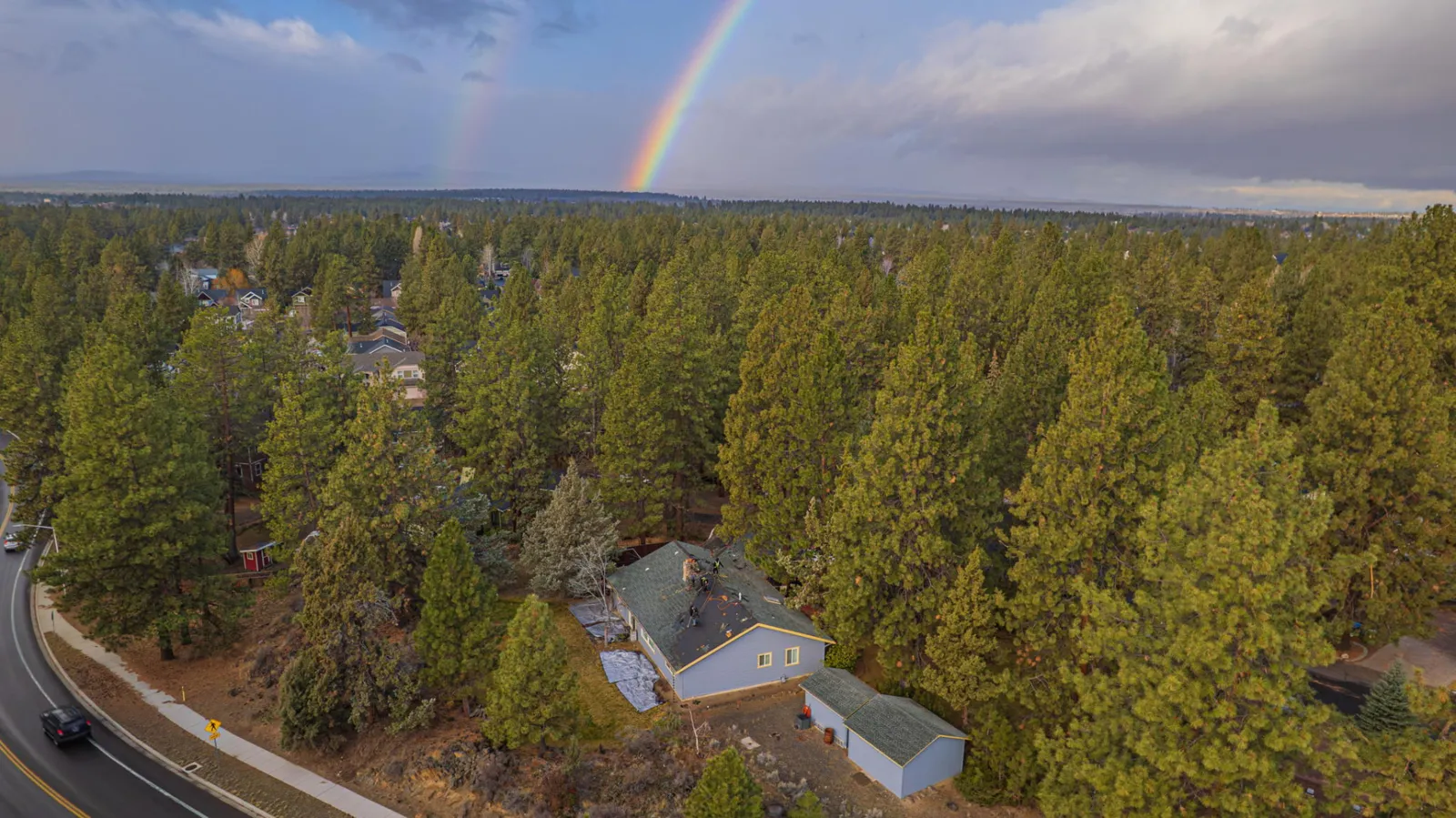
What winter does to a Central Oregon roof
Winter here is not just cold — it is repetitive. Snow accumulates, midday sun melts the surface, and overnight temperatures refreeze it, sometimes dozens of times in a season. That freeze-thaw cycling drives water into any gap it can find, expands it, and slowly opens that gap wider. Add ice dams at cold eaves, meltwater backing up under shingles, and snow loads sliding across flashing and vents, and small unresolved defects from summer become active leaks by February. Almost every winter leak we get called about was visible and fixable in the fall.